 BACK TO ARTICLES
Non Executive Director Roles: The Future of Board Membership
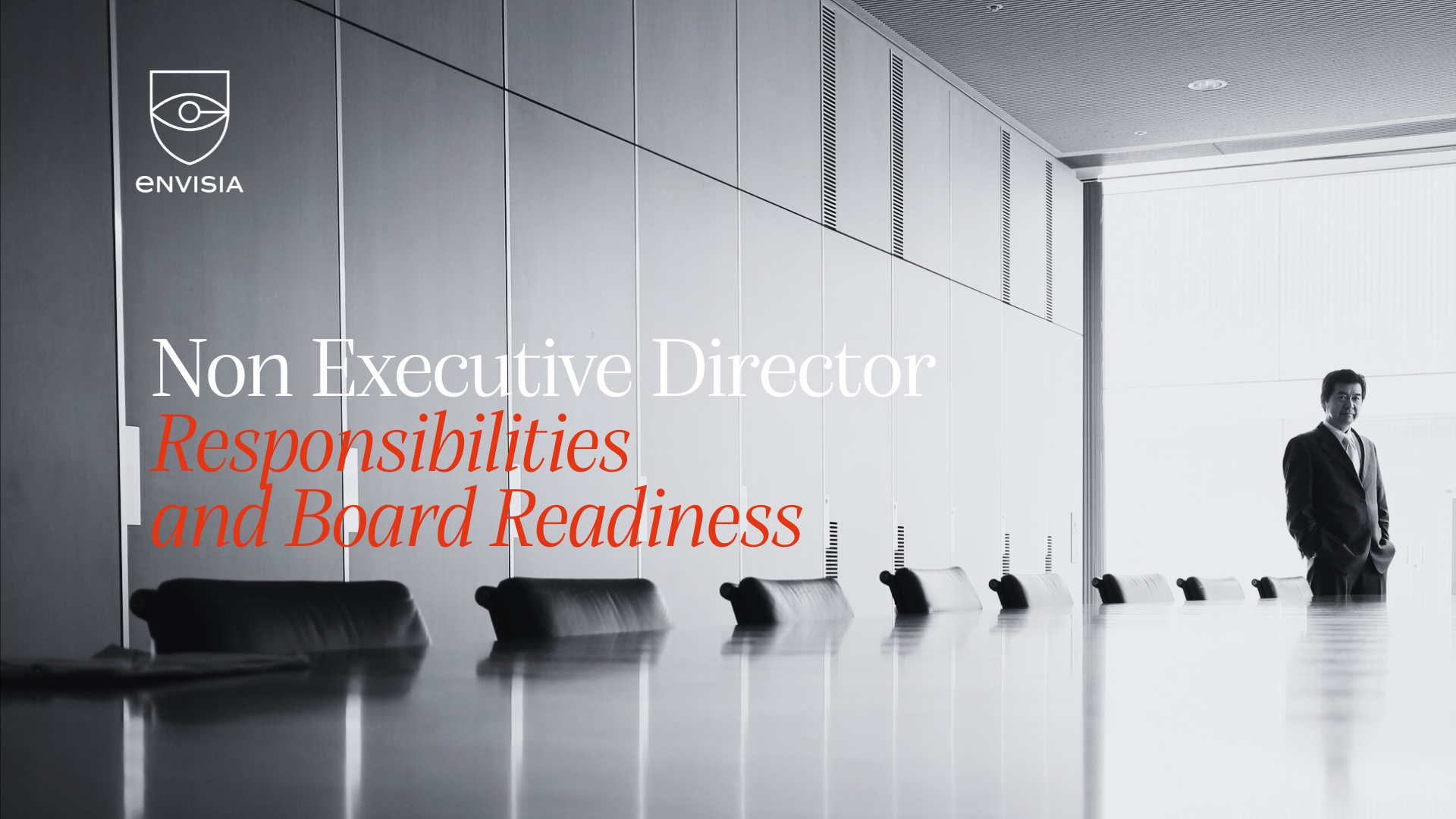
The landscape of corporate governance is shifting rapidly. As companies navigate digital transformation, ESG requirements, and unprecedented market volatility, the role of the board of directors has never been more critical. Moving beyond mere compliance, modern boards are strategic drivers of value. At the heart of this evolution are non executive director roles, bringing diverse perspectives, independence, and specialized expertise to the boardroom.
Understanding Board Member responsibilities and boardroom dynamics
Effective governance requires a clear understanding of board member responsibilities. Unlike executive management, which focuses on daily operations ("on the field"), non-executive directors operate from a strategic vantage point ("on the sidelines"). Their primary role is to advise, challenge, and support the executive team while ensuring long-term sustainability and stakeholder trust.
Key board member responsibilities include:
- Setting the strategic direction of the organization.
- Monitoring executive performance and compensation.
- Ensuring robust risk management and internal controls.
- Safeguarding the interests of shareholders and other stakeholders.
However, fulfilling these responsibilities requires mastering complex boardroom dynamics. A functional board is not just a collection of talented individuals; it is a collaborative team. Understanding boardroom dynamics means fostering a culture where constructive dissent is encouraged, information flows transparently, and decisions are made based on objective data rather than personalities. It involves balancing diverse viewpoints to build consensus while ensuring the board remains focused on its strategic mandate.
How to become a Board Member: A step-by-step guide
For experienced executives looking to transition from an operational role to a strategic one, knowing how to become a board member is the first step toward a new phase of professional impact.
- Define your value proposition: Identify what specialized skills you bring to a board—be it finance, legal, digital transformation, or industry-specific expertise.
- Develop Governance knowledge: Understand that being a director requires specific knowledge beyond your functional area. In the rapidly evolving Romanian landscape, board member education is the primary catalyst for professionalizing this position and ensuring alignment with international best practices.
- Network strategically: Connect with current board members, executive search firms, and governance institutions like Envisia.
- Prepare for Board interviews: Be ready to discuss your experience in strategic decision-making, crisis management, and your understanding of governance principles.
Transitioning into a non executive director role requires a mindset shift from being the decision-maker to being the advisor. According to Envisia insights, success in these roles often hinges on moving from a "hands-on" approach to a "coaching" approach, building trust with the executive team through insightful questioning rather than operational interference.
The Role of an Independent Non Executive Director
An independent non executive director plays a pivotal role in maintaining the integrity of corporate governance. Independence is not just a label; it is an attitude of objectivity, free from conflicts of interest (financial, business, or personal ties) that could compromise judgment.
"An independent non-executive director acts as the ultimate guardian of the corporate integrity. Their impartiality is crucial during critical moments such as M&A processes or succession planning", states Carmen Micu.
Professionalization through a Board readiness program
The complexity of modern governance means that experience alone is often not enough. As highlighted in Envisia’s research over time, the role of a board member isn't a performance—it’s a skill that must be learned. To bridge the gap between executive expertise and board effectiveness, participating in a structured board readiness program is essential.
These programs provide the necessary framework for those transitioning into directorship, covering legal liabilities, strategic oversight, and ethical leadership.
Furthermore, achieving a recognized board member certification validates an individual’s competence and commitment to professional standards. A board readiness program not only prepares you for the challenges of the boardroom but also provides the credibility needed to secure appointments in an increasingly competitive market.
"Transitioning to a non-executive role requires a fundamental shift in ones mindset. A NED must move from hands-on operational leadership to providing strategic, advisory counsel", according to Carmen Micu.
Engaging in structured learning is crucial for mastering independent thinking and professional integrity.
- For those seeking international recognition, the Henley–ENVISIA Postgraduate Certificate in Board Practice and Directorship provides a robust framework based on OECD principles.
- Locally, the program “Corporate Governance that Creates Value – Corporate Governance in Practice”, developed by Envisia in partnership with Bucharest Stock Exchange and Romanian-American University, offers accredited professionalization tailored to the Romanian economic context.
Conclusion: Elevating Governance through professionalization
Transitioning from an executive role to a non executive director requires more than just professional experience; it demands a fundamental shift in mindset—from hands-on operational leadership to strategic, advisory counsel. As the demands on boards increase, mastering boardroom dynamics and fully understanding board member responsibilities is non-negotiable.
Whether you are looking to serve as an independent non executive director or seeking to enhance your effectiveness on a current board, continuous education is key. By participating in a tailored board readiness program and pursuing recognized board member certification, you not only elevate your own career but directly contribute to building sustainable, high-performing organizations in Romania and beyond.
Are you ready to make the transition to the boardroom? Explore our specialized education programs to begin your journey.
 Facebook
 Linkedin
Recommended articles
ESG & Risk Oversight
ESG & Risk Oversight
Governance & Board Effectiveness
Governance & Board Effectiveness
Governance & Board Effectiveness
Governance & Board Effectiveness
Digital Transformation & AI Governance
Governance & Board Effectiveness
Governance & Board Effectiveness
Governance & Board Effectiveness
Governance & Board Effectiveness
Digital Transformation & AI Governance
Digital Transformation & AI Governance
Governance & Board Effectiveness
Leadership, Boardroom Dynamics & Crisis Response
Future of Boards & NED Careers
Leadership, Boardroom Dynamics & Crisis Response
Governance & Board Effectiveness
Leadership, Boardroom Dynamics & Crisis Response
Digital Transformation & AI Governance
ESG & Risk Oversight
Governance & Board Effectiveness
Leadership, Boardroom Dynamics & Crisis Response
Digital Transformation & AI Governance
Leadership, Boardroom Dynamics & Crisis Response
Leadership, Boardroom Dynamics & Crisis Response
Governance & Board Effectiveness
Future of Boards & NED Careers
Future of Boards & NED Careers
ESG & Risk Oversight
Leadership, Boardroom Dynamics & Crisis Response
Governance & Board Effectiveness
Governance & Board Effectiveness
Leadership, Boardroom Dynamics & Crisis Response
Future of Boards & NED Careers
Governance & Board Effectiveness
Governance & Board Effectiveness
Governance & Board Effectiveness
Governance & Board Effectiveness
Future of Boards & NED Careers
Leadership, Boardroom Dynamics & Crisis Response
Future of Boards & NED Careers

