 BACK TO ARTICLES
Beyond the Founder: A Strategic Guide to Succession Planning for Family and Entrepreneurial Businesses
.png)
Succession in family businesses remains one of the greatest challenges for Romanian companies. The lack of planning, governance structures, and dedicated education makes the transition between generations a major risk to business continuity. The experience of Fan Courier shows that early planning, solid governance, and the gradual involvement of the next generation can turn succession into a competitive advantage.
This was the topic of Episode #11 of Academia de Guvernanță, a media project produced by Envisia, Profit.ro, and Prima News. The discussion brought together Carmen Micu, CEO and Co-founder of Envisia; Adrian Mihai, CEO and Co-founder of Fan Courier; and Tudor Mihai, Executive Director of Fan Courier International, who explored the topic of business succession. Moderator: Sebastian Zachmann.
Why Early Succession Planning is Critical for Company Resilience
Generational change in family businesses is closely linked to the existence of a clear plan, a designated successor, and a governance structure that supports the process. In Romania, this topic is still treated superficially, given that most family businesses remain under the control of their founders. The historical context plays an important role: Romania’s private economy is relatively young, and many companies are still led by their first generation of entrepreneurs.
“There needs to be a plan, a person, and a governance structure assigned to that plan and that person. It sounds simple, but in Romania, 90% of family businesses are still in the hands of the first generation, the founding entrepreneur,” stated Carmen Micu, CEO and Co-founder of Envisia.

She draws attention to the fact that, although there are attempts at formalization, few companies have functional governance systems capable of ensuring business continuity. The need for education and understanding of these mechanisms is high, yet the level of awareness remains low.
Understanding the Full Succession Planning Process
For many Romanian businesses that have reached maturity, succession has become inevitable. However, in the absence of economic predictability in recent years, few entrepreneurs have invested time and resources in preparing for this transition.
“Succession doesn’t happen like changing drivers—one gets out and another gets in. If it were that simple, it would be easy. It’s much more complicated than that. It has to be prepared. And it has to be prepared well in advance,” said Adrian Mihai, CEO and Co-founder of Fan Courier.
His experience within international family business organizations shows that succession planning begins much earlier than the formal transfer of power—sometimes even in the childhood of future successors. Education, international exposure, and contact with different cultures are considered essential for shaping a generation capable of carrying the business forward.
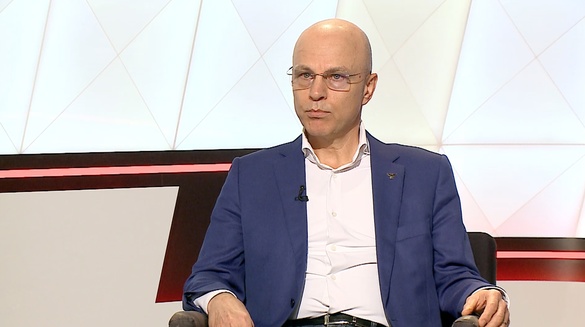
“Preparation starts long before the actual moment arrives. And if you do it early, the chances of success are much higher,” Adrian Mihai explained.
From a governance perspective, succession plans should be developed over the medium and long term, depending on the industry and the specific characteristics of the company.
“Generally, a succession plan varies depending on the company and the industry, ideally between 3–5 years, and up to 10 years,” stated Carmen Micu.
The Board's Role: Governance as the Bedrock of a Smooth Leadership Transition
Governance is described as the infrastructure that supports a company over the long term, regardless of leadership changes. Without clear rules, procedures, and control mechanisms, the risk of stagnation or regression increases significantly.
“Governance is the backbone that supports a company over the long term. Essentially, without governance, we cannot ensure this transgenerational resilience,” said Carmen Micu.
The board plays a crucial role not only in oversight, but also in challenging the founder by offering perspectives that might otherwise be overlooked.
“The board helps you structure strategy, see competition differently, and prepare succession,” explained Adrian Mihai.
The Strategic Value of Independent and Non-Executive Directors
Differences in vision between founders and successors are inevitable, but they can become a growth driver if managed properly. Separating emotion from business decisions is essential in a family business.
“Differences in vision can still take the company in a very good direction,” stated Tudor Mihai, Executive Director of Fan Courier International.
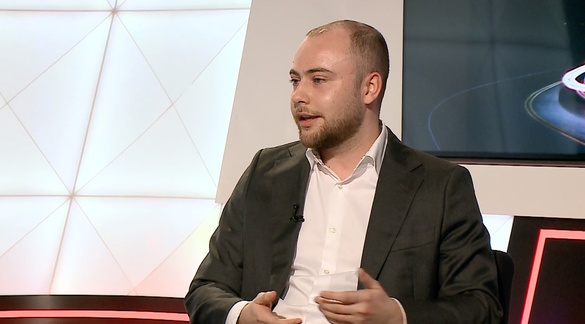
In this context, structures such as a Family Council allow emotional and vision-related matters to be debated, while the board ensures pragmatic and rational oversight of the company.
There are also situations in which children cannot or do not wish to take over the business. In such cases, governance provides clear solutions by separating the role of shareholder from that of executive management.
“Together with the board, you establish an executive management team from outside the company,” Adrian Mihai explained, emphasizing that the business can continue without the family’s direct involvement in daily management.
Ensuring Business Continuity Through Effective Governance
Early involvement of the next generation in the company’s activities is seen as a key element of a healthy transition. At Fan Courier, this process unfolded naturally, built over time through direct exposure to the company’s day-to-day operations.
“I started from the bottom. I learned the business from the ground up, every process step by step. It’s a formula that works,” said Tudor Mihai.
Going through operational stages allowed him to deeply understand the company’s mechanisms and build strong relationships with employees, which facilitates strategic decision-making.
For the founder, this approach is essential to avoiding decisions disconnected from operational reality.
“If you make decisions without having information from the ground up, you may not make the right ones,” Adrian Mihai emphasized.
Maintaining Credibility: How Succession Planning Impacts Financing and Investor Confidence
Compared to other countries, Romania suffers from the lack of a solid tradition and a legislative framework that protects family capital. The absence of a family foundation law is seen as a major obstacle to ensuring continuity.
“Romania, along with Bulgaria, is the only country without a law on family foundations—private foundations meant to protect Romanian capital,” said Adrian Mihai.
For investors and creditors, continuity is not tied to a single individual, but to the systems that support the company. Procedures, committees, and governance structures provide assurance that commitments will be honored regardless of generational changes.
“For them, the guarantee of this transfer is precisely this governance,” stated Carmen Micu.
Key Takeaways
- Succession in family businesses must be planned well in advance to have real chances of success.
- Strong governance is essential for the transgenerational continuity of companies.
- Involving the next generation at the operational level supports sound strategic decision-making.
- Differences in vision between generations can become opportunities if managed through boards and dedicated structures.
- Education and the legislative framework are key factors in the maturation of succession within the Romanian business environment.
Academia de Guvernanță
Academia de Guvernanță is a media project produced by Prima News, Profit.ro, and Envisia—the first business school in Romania dedicated to corporate governance and the professionalization of board members. Airs every Friday at 8:00 PM on Prima News. Replay on Tuesdays at 11:00 PM. Available online on Profit.ro.
About Envisia
Envisia is the first business school in Romania dedicated to corporate governance and the professionalization of board members. Through accredited programs, masterclasses, and media projects such as Academia de Guvernanță, Envisia supports the development of leaders who turn good governance principles into performance and trust. More details at www.envisia.eu
 Facebook
 Linkedin
Recommended articles
Governance & Board Effectiveness
ESG & Risk Oversight
ESG & Risk Oversight
Governance & Board Effectiveness
Governance & Board Effectiveness
Governance & Board Effectiveness
Governance & Board Effectiveness
Digital Transformation & AI Governance
Governance & Board Effectiveness
Governance & Board Effectiveness
Governance & Board Effectiveness
Governance & Board Effectiveness
Digital Transformation & AI Governance
Digital Transformation & AI Governance
Governance & Board Effectiveness
Leadership, Boardroom Dynamics & Crisis Response
Future of Boards & NED Careers
Leadership, Boardroom Dynamics & Crisis Response
Governance & Board Effectiveness
Leadership, Boardroom Dynamics & Crisis Response
Digital Transformation & AI Governance
ESG & Risk Oversight
Governance & Board Effectiveness
Leadership, Boardroom Dynamics & Crisis Response
Digital Transformation & AI Governance
Leadership, Boardroom Dynamics & Crisis Response
Leadership, Boardroom Dynamics & Crisis Response
Governance & Board Effectiveness
Future of Boards & NED Careers
Future of Boards & NED Careers
ESG & Risk Oversight
Leadership, Boardroom Dynamics & Crisis Response
Governance & Board Effectiveness
Governance & Board Effectiveness
Leadership, Boardroom Dynamics & Crisis Response
Future of Boards & NED Careers
Governance & Board Effectiveness
Governance & Board Effectiveness
Governance & Board Effectiveness
Governance & Board Effectiveness
Future of Boards & NED Careers
Leadership, Boardroom Dynamics & Crisis Response
Future of Boards & NED Careers

